Polio Endgame Strategy
The Polio Endgame Strategy 2019-2023: Eradication, Integration, Containment and Certification
Roadmap to secure lasting world free of all polioviruses
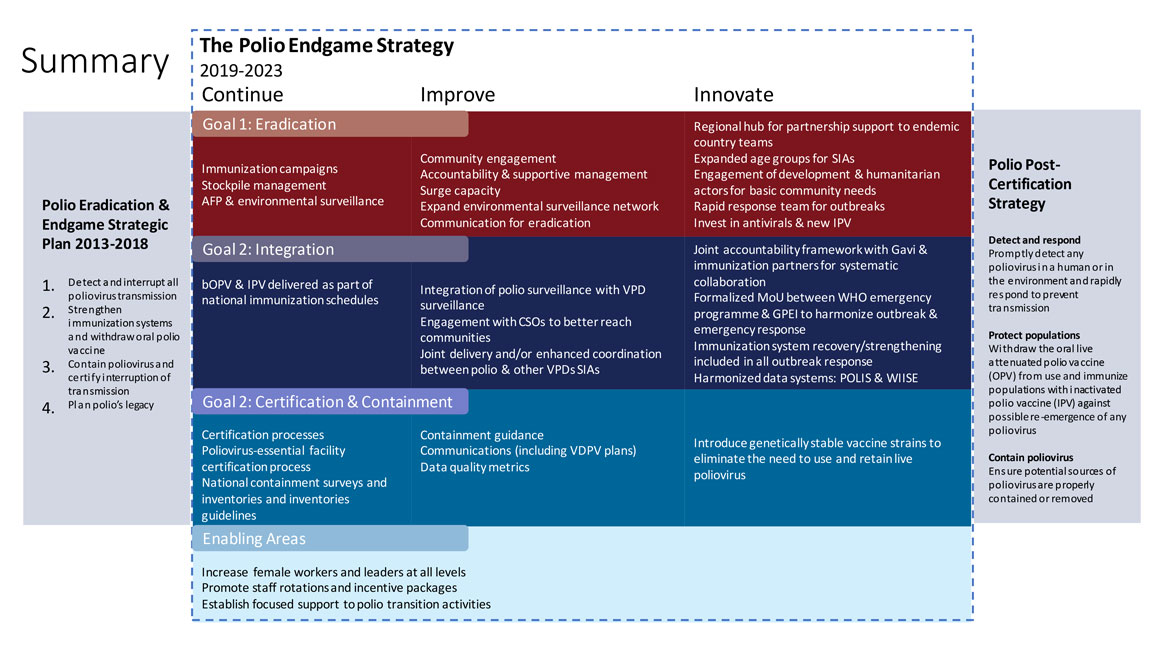
The GPEI Polio Endgame Strategy 2019-2023 lays out the roadmap to achieving and sustaining a world free of all polioviruses. It focuses on three key pillars: Eradication, Integration, and Containment + Certification, as well as critical enabling factors such as gender, research and preparing for Post-Certification Strategy (PCS) implementation. It builds on and optimises use of the proven lessons and tools of the GPEI Polio Eradication and Endgame Strategic Plan 2013-2018, which has brought the world to the threshold of being polio-free and outlines new strategies and innovations that will help ensure we cross the finish line.
Full implementation and financing of the GPEI Polio Endgame Strategy 2019-2023 will result in a world where no child will ever again be paralysed by any poliovirus anywhere, while maintaining the functions to continue to benefit broader public health and development programmes.
The GPEI Polio Endgame Strategy 2019-2023 was developed in 2018 and early 2019, in broad consultation with GPEI stakeholders from around the world.
 Downloads:
The GPEI Polio Endgame Strategy 2019-2023 | English | عربي | 中文 | Français |Русский| Español |
Draft Interim Programme of Work for Integrated Actions in the context of COVID-19 (iPOW) | English|
Strategy for the Response to Type 2 Circulating Vaccine-Derived Poliovirus 2020–2021 | English |
Polio Endgame Strategy 2019-2023 – Stakeholder Consultation Report
Polio Endgame Strategy – Executive Summary |English| عربي | 中文 | Français |Русский| Español |